On this page
First, congratulations. Reaching the profit target confirms your place on the live Junior Desk.
Which Target Applies to You
- $10,000, if you registered on or after 1 October 2026, or you cancelled and registered again at any point.
- $20,000, if you registered before 1 October 2026 and have stayed on your original criteria.
If you were on the old two-stage structure, note that Phase 2 no longer exists.
What Happens Next
Reach out to support@developtraders.com and we’ll get things moving at our end: your assessment goes for review, and we’ll send you the Live Trading Agreement to sign.
That takes a few days, and traders usually start on live capital at the beginning of a month. In the meantime we’ll set you up with an account running the same parameters you’ll have on the desk, so you can settle into them before anything real is on the line.
The review doesn’t decide whether you join, it decides how you start: the size you begin with, the limits we set, and where the support goes in your first few weeks. On the Live Desk you aren’t allocated capital, you’re allocated limits. The daily loss limit starts somewhere between $250 and $2,000 and the maximum drawdown between $5,000 and $10,000, and where you land in those ranges comes straight from how you traded during the assessment. Two traders can hit the same target and start on very different limits.
The limits may be tighter than those you traded with during your assessment, and that’s intentional. The interim account helps you adapt to the firm’s risk parameters before moving on to live capital. These limits are your starting point, not a fixed ceiling. As you demonstrate consistent performance and sound risk management, your limits will increase accordingly.
What we look at
On the current criteria, the review covers the account you pass with, including any resets on it. Accounts that closed before this one don’t come into it. If you are on the original criteria, it covers your trading history on that account as a whole, every reset included.
- Risk-adjusted returns rather than raw profit.
- Position sizing - whether your size stayed in a sensible range or swung around.
- How you managed drawdown, and how close you ran to the daily loss limit.
- How you adapted after a difficult stretch.
- Whether the edge looks like it holds up across different market conditions.
Two Examples
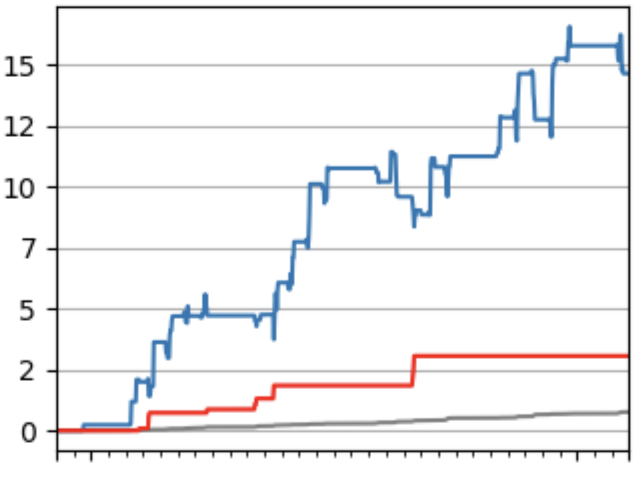
Trader A reaches the target over several weeks. Size stays consistent throughout, no single day comes close to the daily loss limit, and the curve climbs in steps rather than jumps.
Trader B reaches it inside a week, all of it from one sharp move early on. Two days came within a few hundred dollars of the limit, size drops off sharply afterwards, and the curve is flat from there.
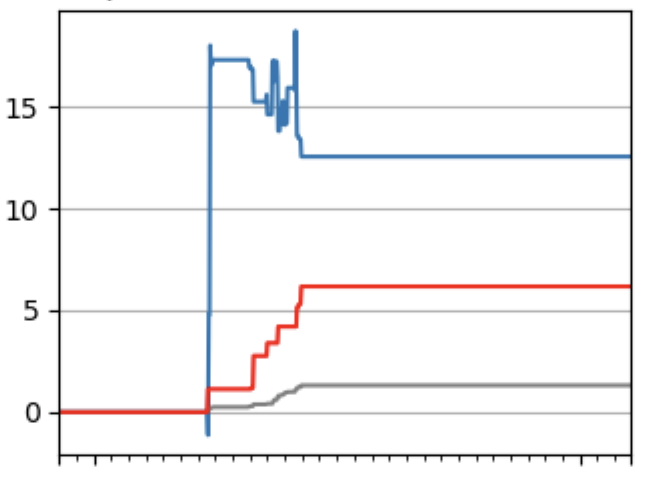
Both have earned a place on the desk. Trader A starts on wider limits, because there’s more evidence of consistent performance behind it.
Risk Consistency & Performance Expectations
Your true capability shows not through hitting the threshold quickly, but through how consistently you trade.
In practice that means size that stays in a range rather than jumping around, risk per trade that looks much the same in week four as in week one, and bad days handled the same way as good ones. None of that is about trading cautiously - it’s about the result being repeatable.
It’s also the single biggest factor in where your starting limits land on the Live Desk.
Once you’re on the Live Desk
- Real capital feels different, and the usual reaction is to either tighten up or push harder. Don’t change what got you here.
- Limits move up with performance, so the size you start with matters a lot less than how you trade it.
- You can request a withdrawal every few weeks or monthly, whatever suits. There’s no minimum buffer, though building the account up first is usually the better call.
If you have any questions, please reach out to support@developtraders.com.